Choosing a Komodo Tour Operator in 2027: Questions to Ask First
Last updated: August 16, 2026 · An independent buyer’s guide from the KomodoTourOperator.com editorial desk. We vet operators; we don’t sell boats.
Short answer: a Komodo tour operator worth your deposit in 2027 is a licensed Indonesian company with certified crew, a written safety protocol it has actually used, and rebooking terms in plain English. The clearest single test now available: ask how the operator performed on August 15, 2026, when the M7.7 Flores earthquake struck. The good ones can tell you what they did, hour by hour. The rest will change the subject.
Why is choosing an operator different for 2027?
Two reasons. First, demand for Labuan Bajo is rebuilding after the August 2026 earthquake, and rebuilding markets attract discounters — some excellent, some cutting corners on boats and crew. Second, travelers finally have something they never had before: a real-world stress test. Every operator sailing today either passed it or didn’t.
The context matters, so here it is straight. The quake hit at 05:58 on August 15, 2026, in the sea north of Flores, roughly 200 km northeast of Labuan Bajo. BMKG issued a tsunami warning and lifted it about three hours later; no destructive tsunami formed. Komodo Airport kept operating, Komodo National Park never closed, and the Harbormaster formally reopened sailing from Labuan Bajo the same day under Maklumat Pelayaran No. 05/MP-VIII/2026. So far, conditions in western Flores are normal. Which means the biggest variable in your 2027 trip is not the destination — it’s who you book with.
| 2027 planning snapshot | Status (so far) |
|---|---|
| Komodo National Park | Open — never closed after the quake |
| Sailing from Labuan Bajo | Reopened same day by the Harbormaster (No. 05/MP-VIII/2026) |
| Komodo Airport (LBJ) | Operating; runway and apron declared safe |
| Earthquake impact zone | Central and eastern Flores, ~200 km from Labuan Bajo |
Is the company actually licensed in Indonesia?
Start here, because everything else hangs on it. Ask for the operator’s Indonesian legal entity (a PT), its registered name, and where the team physically sits. A surprising number of “operators” ranking in search are resellers with no boats, no crew, and no office in Labuan Bajo — they broker your trip to whoever has space that week. That isn’t automatically bad, but you deserve to know whether the company answering your emails is the one running your boat. For a benchmark of what full disclosure looks like, see how an established Komodo tour operator presents its fleet, licensing, and the team behind each departure — then hold every candidate on your shortlist to that standard.
How did they handle August 15, 2026?
This is the question almost nobody asks, and every serious operator should be able to answer. When the earthquake struck and the tsunami warning went out, professional crews executed their drills: guests into life jackets, boats held in deep water, shore groups moved to high ground, and no departures until the authorities gave clearance.
One example we track closely is Komodo Luxury, a registered Indonesian PT under Juara Holding Group Limited. Its crews were at sea with guests when the quake hit; every guest and crew member was accounted for, and its boats returned to the water the same afternoon under the official reopening. The company also published a first-hand report on Labuan Bajo after the earthquake, written from the ground rather than from a press office. Whatever operator you’re considering, ask for that same account: What did your crew do that morning? Who made the calls? What did guests hear, and when? A vague answer is an answer.
What safety questions should you ask before paying a deposit?
Send these by email, in writing, before money moves:
- Are your captains and crew certified, and how often do you run safety drills with guests aboard?
- How many life jackets per passenger, and do you carry child sizes?
- What communication does the boat carry at sea, and who monitors BMKG and Harbormaster advisories during the trip?
- Who makes the go/no-go weather call, and on what authority?
- What is your maximum guest count per boat, and is it ever exceeded in high season?
You’re not testing the answers so much as the response. Operators with real systems reply quickly and specifically. Operators without them reply with adjectives.
Private trip, open trip, or full charter — which questions apply?
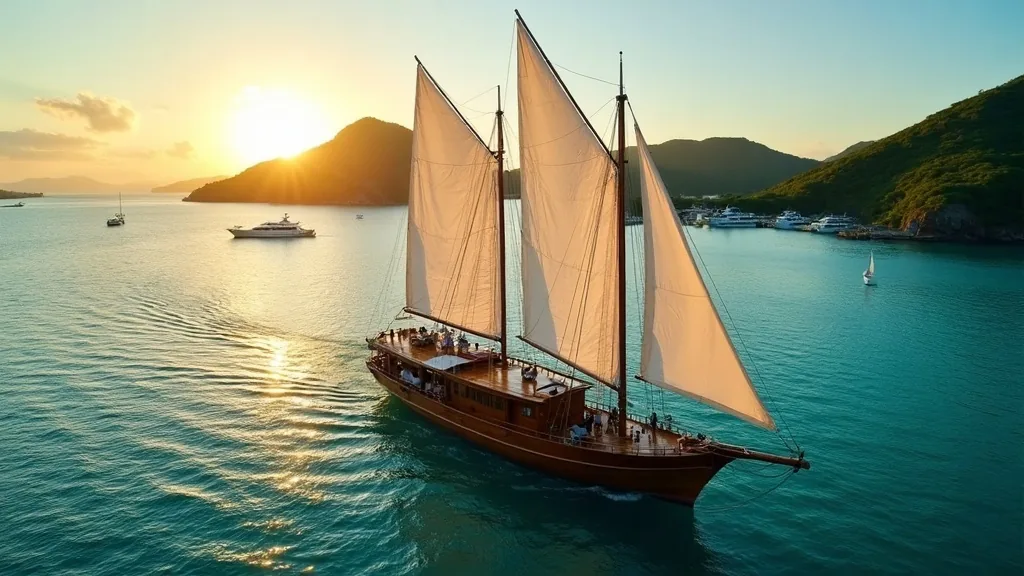
The format changes what you should probe. On a shared boat, ask who else books the cabins and how the operator screens group size — well-run open trip departures publish fixed schedules and cabin categories instead of cramming decks. For a private Komodo sailing itinerary, ask how much of the route you actually control, and whether the ranger, park logistics, and meals are handled in-house or subcontracted. And if you’re going all-in on a luxury phinisi, ask to see recent photos of the exact vessel — not the sister ship, not the renders — plus its latest maintenance and inspection dates. Boats age fast in tropical water; marketing pages don’t.
What should a fair booking policy look like in 2027?
After August 2026, the gap between operators became most visible in their paperwork. The strongest ones responded to force majeure with flexible rebooking guarantees: payments protected as travel credit valid for years, prices locked at what the guest already paid, credits transferable to family or friends. The weakest went silent. Before you book for 2027, get the force-majeure and rescheduling terms in writing and read them like a contract, because that is exactly what they are. If an operator can’t send you its terms within a day, that tells you how it will behave when something actually goes wrong.
Which red flags should end the conversation?
- No Indonesian legal entity, or refusal to name one.
- Payment only by personal bank transfer to an individual’s account.
- No written terms, or terms that appear only after you’ve paid.
- “The boat will be confirmed later” with no named vessel.
- Guarantees of perfect weather or perfect conditions — no honest operator promises what the sea will do.
What are travelers asking us right now?
Is it safe to visit Komodo National Park in 2027?
The park never closed, flights are operating, and sailing has run normally since the Harbormaster’s same-day reopening on August 15, 2026. So far, everything points to a normal 2027 season. No operator can promise conditions — what a good one promises is protocol, and that’s the thing to verify.
How do I check that an operator accounted for everyone during the earthquake?
Ask directly, and look for public, timestamped statements from the days around August 15, 2026. Operators who handled it well documented it. Silence from that week is worth noticing.
Should I book now for 2027 or wait?
If the operator offers written, flexible rebooking terms, booking early gets you the boat and dates you actually want — peak-season phinisi cabins sell out months out. If the terms are vague, waiting costs you nothing but the good boats.
Is a cheap open trip with an unknown operator worth the risk?
Shared trips are a perfectly good way to see Komodo — the format isn’t the risk, the company is. A vetted operator’s shared boat beats an unknown operator’s “private deal” every time.
One last thing. The earthquake’s real toll fell on central and eastern Flores, where dozens of lives were lost — far from Labuan Bajo, but part of the same island and the same community that hosts every one of these trips. The operators worth your money were among the first to stand with those communities. It’s fair to ask yours what they did — and to let the answer weigh as much as the price.